
Early detection
If melanoma is recognised and treated early enough, it is almost always curable. The first sign is often a change in the size, shape or colour of an existing spot, or the appearance of a new spot.
Checking yourself and your loved ones
Start by checking your entire body, including skin not normally exposed to the sun. You could ask for help from someone else to check difficult-to-see areas, such as your back, neck and scalp.
If you find anything of concern, contact your doctor or skin specialist straight away.
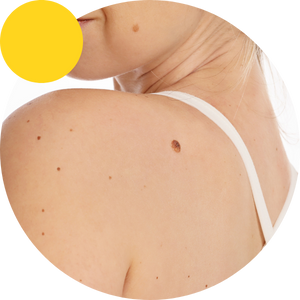
Know the skin you are in
Melanomas can often be detected using the ABCDEFG system below, although not all melanoma lesions show these characteristics.
These images are indicative only. Look for the type of behaviour described rather than trying to match your lesion to the images.
If you have concerns, contact your doctor or skin specialist without delay.
(Photos courtesy of DermNet)
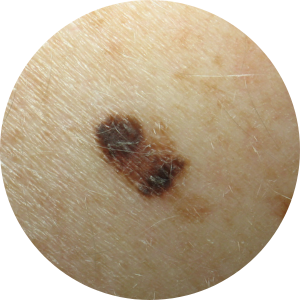
Asymmetry
One half is different from the other half
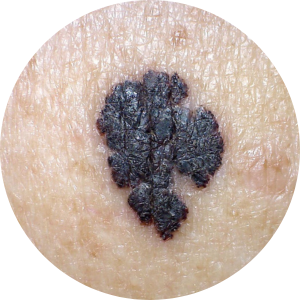
Border irregularity
The edges are poorly defined e.g. notched, uneven or blurred
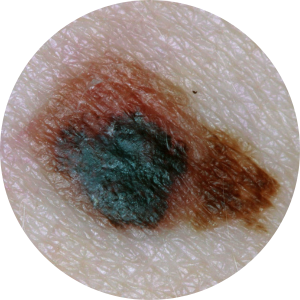
Colour is uneven
Shades of brown, tan and black are present (there may also be white, grey, red, pink or blue)
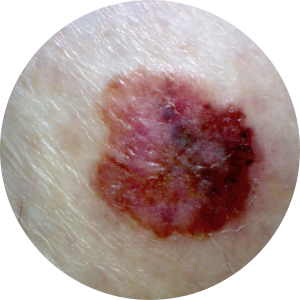
Different
Looks different from other spots, freckles or moles (“ugly duckling”)*
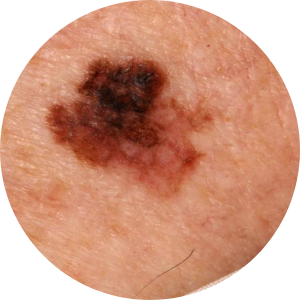
Evolving
Any change in growth; new, elevated or painful
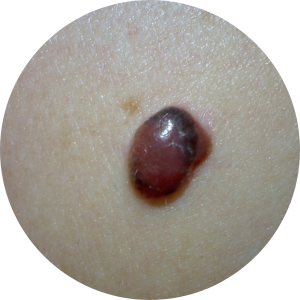
Firm
To the touch
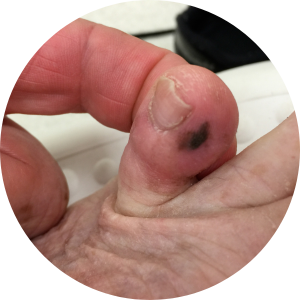
Growing
Most are larger than 6mm and keep growing
* The Ugly Duckling Rule is when you compare your moles with each other, and one stands out or looks different from that of nearby moles. It is the ugly duckling, and we advise you to contact a doctor or skin specialist to get an expert opinion.
I was aware of melanoma but never for one second did I think my smudge was cancer. It was sore, as if I had stood on something. It was a rusty-coloured, smooth smudge, not instantly recognisable as a mole or freckle.